

Edc Organizers Vs Tactical Wallets Which Should
In the world of high-end carry, the line between "organized" and "minimalist" often dictates how we interact with our gear every single day. As collectors of precision-engineered tools—from titanium watches to machined pens—we understand that how we carry our essentials is just as important as the tools themselves. The debate between choosing an EDC organizer versus a tactical wallet isn's just about aesthetics; it is a fundamental choice between modular expansion and streamlined pocket presence.
This comparison is designed for the enthusiast who is tired of the "black hole" effect in their bags and the bulk of an overstuffed pocket. Whether you are looking to secure your daily essentials in a streamlined front-pocket carry or need a modular system to manage a growing kit of tools, understanding the material science and functional trade-offs is essential for making the right investment in 2026.
Affiliate disclosure: if you buy through these links, we may earn a commission at no extra cost to you.

Table of Contents
Models in this comparison
Affiliate disclosure: if you buy through these links, we may earn a commission at no extra cost to you.

Quick Verdict
Choose Edc Organizers if...
- You carry a diverse kit including flashlights, multitools, and pens.
- You prefer bag-based carry or modular pouch systems.
- You need shock absorption and high-capacity tool retention.
Choose Tactical Wallets if...
| Factor | Edc Organizers | Tactical Wallets |
|---|---|---|
| Primary Use Case | Tool management & bag organization | Minimalist pocket carry |
| Material Focus | High-denier Nylon, Cordura, Kydex | Aluminum, Titanium, Carbon Fiber, Kdydex |
| Capacity Focus | High (Multiple tools + cards) | Low to Medium (4–12 cards) |
| Reliability | High shock absorption/modular | High structural/weather resistance |
| Key Advantage | Prevents gear loss in bags | Reduces pocket bulk and back strain |
| Main Drawback | Increased bulk/volume | Limited tool/accessory capacity |
About Edc Organizers
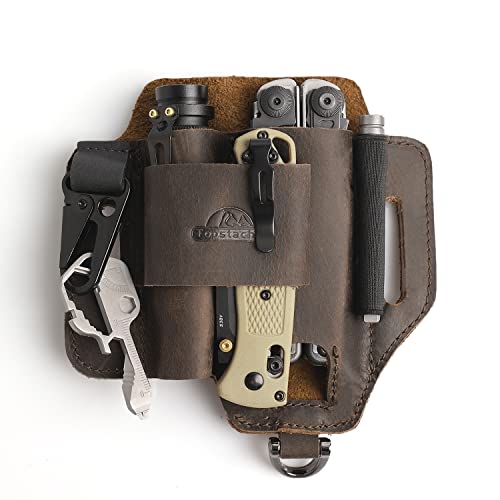
EDC organizers are designed to solve the problem of "gear drift." When you carry high-end items like a 2000-lumen flashlight or a precision-machined pen, throwing them into a loose bag pocket risks scratches, damage, or losing them in the depths of a backpack. Organizers—often made from high-denier Cordura or ballistic nylon—provide a structured environment. These materials are preferred for bag organizers because they absorb shock and allow for modular expansion through systems like MOLLE or Velcro panels.
The strength of an organizer lies in its ability to house diverse items. While a wallet is limited to flat objects, an organizer can manage the three-dimensional geometry of a multitool or a compact flashlight. Using materials like Kydex for rigid retention within an organizer ensures that tools stay exactly where they are placed, preventing them from rattling or shifting during transit. It is a system built for the user who views their gear as a cohesive kit rather than just a collection of items.
About Tactical Wallets
Tactical wallets represent the pinnacle of minimalist engineering. Unlike traditional leather bifolds, these are engineered from military-grade materials such as 6061 or 7075 aluminum, titanium, or Kydex. The primary design purpose is front-pocket carry, which improves security and reduces the back strain associated with bulky rear-pocket carry. They are built for the individual who wants their most vital items—cards and cash—to be accessible under stress with zero structural degradation.
True tactical efficiency in a wallet is defined by accessibility and precision. High-end models often feature CNC-machined plates, countersunk screws, and chamfered edges to ensure a smooth feel against the body. Because they are built from metals or reinforced polymers, they offer superior protection against the elements compared to leather, which can absorb moisture and degrade in wet conditions. They are the ultimate solution for those who want a "set it and forget it" carry that lasts a lifetime.
Head-to-Head: Capacity vs. Profile
The most immediate difference is the trade-off between volume and thickness. An EDC organizer is a volume-centric solution. It allows you to carry a wide array of tools, but it occupies significant space in a bag or on a belt. According to EDC Armory, the choice often comes down to whether you need to house larger tools or just slim essentials. If you try to turn an organizer into a wallet, you end up with a bulky, impractical mess.
Conversely, tactical wallets are profile-centric. They are designed to be as thin as possible while maintaining security. While a slim carrier might only hold 4–6 cards, hybrid stacks can reach up to 12. The goal is to maintain a low-profile presence in your pocket. While you can carry a single pen in a tactical wallet, you cannot carry a full kit. You are choosing between the ability to carry "everything" versus the ability to carry "nothing but the essentials."
Head-to-Head: Material Durability
When comparing durability, we look at how these items handle the "daily grind." Tactical wallets often utilize aerospace-grade aluminum or Grade 5 titanium, offering incredible corrosion resistance and strength-to-weight ratios. These materials are designed to survive being dropped on concrete or exposed to the elements without losing their shape. The rigidity of Kydex or metal ensures that your cards are protected from bending.
Organizers rely on the toughness of synthetic fabrics. High-denier Cordura is virtually indestructible in terms of tearing, but it does not offer the same rigid protection as a metal wallet. In wet environments, the synthetic nature of nylon-based organizers is a massive advantage over leather, as they can be easily cleaned and do not rot. However, for pure structural integrity against crushing forces, the metal-based tactical wallet remains the superior choice.
Who Should Choose Each?
Who Should Choose Edc Organizers? You should opt for an organizer if your daily carry includes more than just cards—specifically if you carry tools like flashlights, multitools, or specialized pens. If you primarily carry your gear in a backpack or a messenger bag and want to prevent your gear from becoming a "black hole" of debris, an organizer is your best investment.
Who Should Choose Tactical Wallets? Choose a tactical wallet if you are a minimalist who values pocket-friendly carry. If your priority is a secure, RFID-blocking, and slim-profile solution for your primary identification and payment methods, the precision-engineered metal or Kydex wallet is the superior choice for 2026.
Our Verdict
You cannot compare these two as direct competitors because they serve different roles in a carry ecosystem. However, if forced to choose a primary philosophy: Buy the Tactical Wallet if you want to own less, and buy the EDC Organizer if you want to carry more.
For the modern enthusiast, the best approach is often a hybrid: a tactical wallet for your pocket and a small, modular nylon organizer for your bag. But if you must pick one to define your carry style, go with the tactical wallet for its unmatched ability to streamline your life and protect your most essential data.
Frequently Asked Questions
Can I use a tactical wallet as an EDC organizer?
Generally, no. While some hybrid wallets can hold a single slim tool, they lack the capacity and shock absorption required to manage a full kit of tools like flashlights or larger multitools.
Is aluminum or titanium better for a tactical wallet?
6061 or 7075 aluminum offers great strength for a lower price, while Grade 5 titanium provides superior corrosion resistance and a higher strength-to-weight ratio for long-term durability.
Why avoid leather organizers in wet environments?
Leather is organic and can absorb moisture, leading to mold, odors, and structural degradation. Synthetic materials like Cordura or Kydex are better suited for rugged, wet, or greasy environments.
What is the main benefit of front-pocket carry?
Front-pocket carry, a primary goal of tactical wallets, reduces back strain and makes it much harder for your wallet to be picked or lost compared to rear-pocket carry.


