

Edc Organizers vs Field Watches: Which Should You Buy in 2026
At first glance, EDC organizers and field watches seem like an odd comparison. One is a carry system for your tools, cards, and small accessories. The other is the wristwatch you actually wear, read, and rely on all day. But for a collector or EDC enthusiast, the decision often comes down to the same question: what do you need to protect, display, and use without thinking about it?
If your goal is to keep your everyday carry tidy, protected, and travel-ready, an EDC organizer is the practical buy. If your goal is a watch that reads fast, survives knocks, and handles rain, sweat, and daily wear, a field watch is the better investment. The organizer manages your gear; the field watch becomes part of it.
Affiliate disclosure: if you buy through these links, we may earn a commission at no extra cost to you.
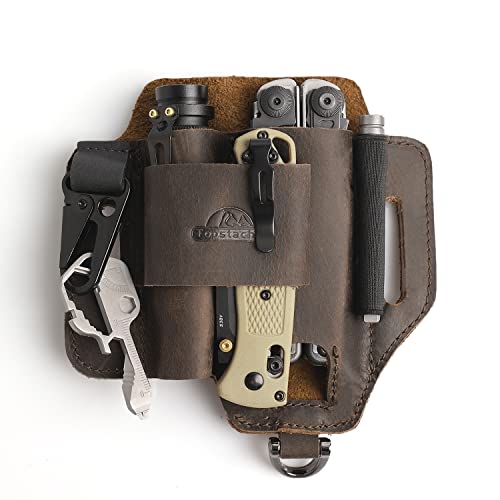


Table of Contents
- Models in this comparison
- Quick Verdict
- About Edc Organizers
- About Field Watches
- Head-to-Head: Protection and Display
- Head-to-Head: Material Quality and Lining
- Head-to-Head: Capacity and Travel Usability
- Head-to-Head: Daily Wear and Readability
- Who Should Choose Edc Organizers?
- Who Should Choose Field Watches?
- Our Verdict
- Frequently Asked Questions
- Sources & References
Models in this comparison
Affiliate disclosure: if you buy through these links, we may earn a commission at no extra cost to you.
Quick Verdict
Choose Edc Organizers if...
- You want a dedicated place for tools, cards, chargers, or small watch accessories.
- You value travel usability, interior protection, and a clean carry layout.
- You prefer a closed-top or structured organizer with felt, leather, or padded lining.
Choose Field Watches if...
- You want a watch that is readable at a glance in low light.
- You need a tough case, reliable power, and a comfortable fit for daily wear.
- You want a piece that works as both a practical tool and a display-worthy collector item.
Before any cost comparison, it is important to note the scope: EDC organizers are carry and storage accessories, while field watches are timepieces. They are not equivalent products, so the right choice depends on whether you need better organization or a better daily watch.
| Factor | Edc Organizers | Field Watches |
|---|---|---|
| Relative Cost (source-bound only) | Not source-bound in this comparison; price depends on size, material, closure, and lining. | Popular EDC cites field-watch examples from $99-$145 to $579, including budget-tough, mid-range, and premium options. |
| Best For | Organizing tools, cards, small accessories, and travel-ready carry. | Timekeeping, daily wear, and a durable watch that can also serve as a display piece. |
| Setup Difficulty | Low to moderate; you need to decide layout, capacity, and how items should be secured. | Low; you mainly choose size, strap, and power source that fit your wrist and lifestyle. |
| Reliability | Depends on stitching, closure strength, lining quality, and how well it protects contents. | Depends on case durability, crystal, water resistance, movement reliability, and readability. |
| Key Advantage | It can protect and display multiple items in one organized system. | It is worn daily and does not need a separate case to be useful. |
| Main Drawback | It does not solve the core need of having a reliable watch on your wrist. | It does not organize other EDC items, and a watch alone may need a case for travel. |
About Edc Organizers
An EDC organizer is about control. The best ones feel less like a pouch and more like a small system: cards have a place, tools have a place, and the items you reach for most are not buried under everything else. In the Amazon examples you are comparing, such as the Topstache Leather Multitool Sheath, EDC Belt Organi, and Maxpedition Platy Pocket Organizer, the common thread is compact carry. The names suggest different approaches, but the real question is whether the organizer gives you quick access without sacrificing protection.
For collectors, the interior matters as much as the exterior. A closed-top organizer is often the smarter travel choice because it keeps dust, fingerprints, and minor impacts away from the items inside. A glass or open display style can look better on a shelf, but it is less protective when you are moving through a day or a trip. Lining is the other key detail: felt is soft and practical for daily storage, while leather adds a more refined look and can age well if cared for. If you are organizing higher-value pieces, a lock mechanism can add peace of mind, but it also adds bulk and another thing to manage.
The best EDC organizer is the one that fits your actual carry. If you only need a small pocket organizer for a few tools and cards, a bulky case is overkill. If you are carrying watch accessories, a multi-tool, cards, and small electronics, a structured organizer with clear compartments will save you from the daily annoyance of digging through a bag. In short, the organizer earns its place by making your carry cleaner, safer, and faster to use.
About Field Watches
A field watch is a different kind of tool. It is not just something you look at; it is something you rely on while moving through your day. Popular EDC notes that a good EDC watch should have a tough case, readable dial, reliable power, and comfortable fit, whether it costs $100 or $500. That is the right frame for a field watch: it should not need constant attention, and it should still look good enough to display when you take it off.
Readability is the first job. A field watch should be readable in two seconds in low light, with high-contrast markers, strong lume, and a simple layout. Popular EDC argues that a simple dial beats a busy one, and that is hard to argue with. If you are checking the time while walking, driving, or working, a cluttered face creates friction. The case should also feel substantial without becoming bulky. Popular EDC points out that case thickness and lug-to-lug length matter more than advertised diameter, and that a 40-43 mm watch with short lugs can wear better than a thin 45 mm piece that overhangs the wrist.
Durability is the second job. Popular EDC recommends at least 100 meters of water resistance for daily life, showers, and swimming, with 200 meters being better for water work or dive-style use. It also says sapphire crystal beats mineral and Hardlex, while shock resistance and a screw-down crown matter more than marketing terms. For the Timex Expedition Scout 40mm and 43mm pieces in your comparison, the appeal is likely the field-watch shape and practical daily use, but the decision should still be based on how the case, dial, crystal, and strap fit your lifestyle. A field watch is not just a display object; it is a piece of equipment that should keep working without drama.
Head-to-Head: Protection and Display
On the organizer side, protection is the main reason to buy. A closed-top EDC organizer gives you more control over what happens to the items inside. It can keep dust away, reduce contact between parts, and make travel feel less risky. If you are carrying a watch, tools, or small accessories, a closed-top design is usually the better choice for protection. A glass-front or open display organizer can look better in a room, but it is less forgiving when you are moving items around or storing the organizer in a bag.
On the field-watch side, protection is built into the watch itself. The case, crystal, crown, and strap all play a role. Popular EDC says sapphire crystal beats mineral and Hardlex, and that shock resistance and a screw-down crown matter more than marketing terms. That means a field watch can be both protective and display-worthy, but in a different way. The watch is the displayed object, while the organizer is the system that protects objects. If display is the priority, a field watch with a clean dial and strong lume can look excellent on a shelf. If protection is the priority, a closed-top organizer is usually the safer choice.
Head-to-Head: Material Quality and Lining
Material quality is where EDC organizers can feel either very practical or very refined, depending on the build. Leather gives a more classic look and can develop character over time, but it requires more care and may not be as forgiving in rough conditions. Felt is often the better choice for interior protection because it is soft, low-friction, and practical for daily use. If you are organizing watch accessories or small tools, the lining should be dense enough to reduce movement and contact. A well-made organizer should feel structured, not floppy, and the closure should hold securely without forcing you to fight it every time.
A field watch has its own material story. The case should feel solid, the crystal should resist scratching, and the strap should match how you actually wear it. Popular EDC notes that strap choice matters more than expected: NATO or rubber straps handle sweat and water well, while steel bracelets dress the watch up, and many EDC watch owners keep two straps to swap by occasion. That is a practical point. A field watch can be made more or less suitable for your life by changing the strap, but the case and dial are harder to adjust. In other words, the organizer is about the materials around your gear, while the field watch is about the materials of the gear itself.
Head-to-Head: Capacity and Travel Usability
Capacity is where EDC organizers shine. A good organizer can hold cards, a multi-tool, small watch accessories, and other carry items in one place. That makes it easier to travel, because you are not guessing whether something is in your pocket, bag, or another pouch. Travel usability also depends on closure type. A simple secure closure is often better for daily carry, while a lock mechanism can be useful for higher-value items or longer trips. The tradeoff is convenience versus security. A lock adds protection, but it also adds weight, bulk, and another object to manage.
A field watch has a different kind of capacity: it does not store other items, but it can carry functions that make travel easier. Popular EDC says power source should match lifestyle: quartz is accurate and cheap to run, automatics feel more watch-like but stop when left off, and solar options are the least maintenance for outdoor users. That matters for travel. If you are moving between time zones, doing outdoor work, or simply not wanting to wind or replace batteries often, the power source and case durability become part of the usability equation. The organizer helps you carry more; the field watch helps you keep time while you do.
Head-to-Head: Daily Wear and Readability
Daily wear is where a field watch becomes the more personal choice. An EDC organizer is useful, but you do not wear it as a constant part of your body. A field watch, by contrast, is on your wrist all day. Popular EDC says most people do best with EDC watch cases under 44 mm and reasonable thickness, and that a 40-43 mm EDC watch with short lugs often wears better than a thin 45 mm piece that overhangs the wrist. That is a useful rule of thumb. If the watch is too large, too thick, or too busy, it will stop being useful and start becoming an annoyance.
Readability is the final test. A field watch should be readable in two seconds in low light, with high-contrast markers, strong lume, and a simple layout. An EDC organizer does not need to be readable at a glance in the same way, but it should still be easy to open, scan, and close. The organizer should tell you where things are without making you dig. The watch should tell you the time without making you squint. Both are about reducing friction, but the field watch does it in a more immediate, personal way.
Who Should Choose Edc Organizers?
Choose an EDC organizer if your main problem is clutter. If your tools, cards, and small accessories are scattered across pockets, bags, and drawers, an organizer will make your carry cleaner and more reliable. It is also the better choice if you want a travel-ready system for watch accessories or small valuables. A closed-top organizer with felt or leather lining, a secure closure, and the right capacity can protect your gear and make daily carry feel more intentional.
Who Should Choose Field Watches?
Choose a field watch if your main need is a dependable daily watch. If you want something that reads fast, survives knocks, handles water and sweat, and still looks good enough to display, a field watch is the better buy. It is also the right choice if you want a piece that works as both a practical tool and a collector item. A good field watch should not need constant babysitting, and it should fit your wrist well enough that you forget it is there until you need it.
Our Verdict
Buy a field watch if you need a watch. Buy an EDC organizer if you need better carry. If you are forced to choose only one, the field watch is usually the more essential purchase because it serves a core daily function. However, if you already have a reliable watch and your main frustration is disorganized carry, the EDC organizer will give you more immediate satisfaction. The best answer is often both: a simple, tough field watch for daily wear, and a closed-top organizer for travel and storage. The watch is what you wear. The organizer is what protects the rest.
Frequently Asked Questions
Is an EDC organizer a replacement for a watch case?
Not exactly. An EDC organizer can protect watch accessories and small items, but a dedicated watch case is usually better for a single watch because it can be shaped around the case, crown, and crystal. If you are carrying multiple items, an organizer is more useful; if you are protecting one watch, a dedicated case may be the better choice.
Which is better for travel, a closed-top organizer or a field watch?
For travel protection of items, a closed-top organizer is usually better because it encloses and separates what is inside. A field watch is travel-ready in the sense that it is worn, but it still benefits from a case or padded storage if you are moving through checked bags, trains, or rough environments.
Should I choose felt or leather lining in an EDC organizer?
Choose felt if protection and low-friction storage are the priority. Choose leather if you want a more refined look and are willing to care for the material. For daily use with tools and small accessories, felt is often the more practical choice.
What makes a field watch a good EDC watch?
Popular EDC says it should have a tough case, readable dial, reliable power, and comfortable fit. It also recommends at least 100 meters of water resistance for daily life, and notes that sapphire crystal beats mineral and Hardlex. A good field watch should be easy to read, durable, and comfortable enough to wear every day.
Can a field watch be both a display piece and a daily watch?
Yes. A clean dial, strong lume, and a well-proportioned case can make a field watch work on the wrist and on a shelf. The key is to choose a layout that stays readable and a case size that does not become annoying over time.


