

EDC Organizers vs Everyday Carry Pouches: Which Should You Buy in 2026?
EDC Organizers vs Everyday Carry Pouches: Which Should You Buy in 2026?
Keeping an everyday-carry kit organized is not just a matter of convenience. The container you choose affects how quickly you can reach a tool, how well small items are protected, and how comfortable the load is during a full day of movement. An organizer usually emphasizes structure and dedicated storage, while a pouch often prioritizes flexibility, compactness, and simpler access.
This comparison is for anyone deciding between a more structured EDC organizer and a flexible everyday carry pouch for tools, cables, batteries, pocket gear, or small personal essentials. The right choice depends less on the product category name than on your primary carry method, the footprint of your gear, and whether you value display-like visibility or minimal bulk.
Affiliate disclosure: if you buy through these links, we may earn a commission at no extra cost to you.
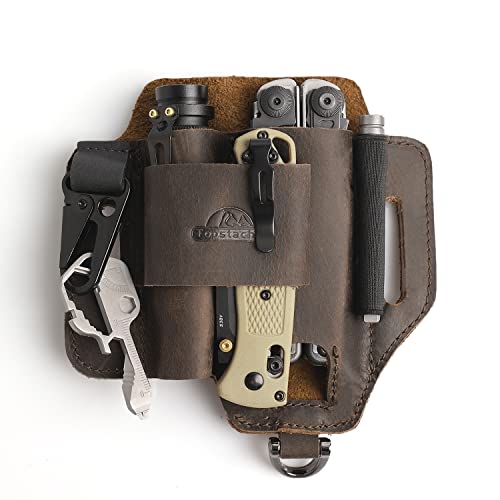


Table of Contents
- Our Top Picks
- Quick Verdict
- About EDC Organizers
- About Everyday Carry Pouches
- Head-to-Head: Protection and Structure
- Head-to-Head: Access and Visibility
- Head-to-Head: Carry Comfort and Footprint
- Head-to-Head: Materials and Closures
- Who Should Choose EDC Organizers?
- Who Should Choose Everyday Carry Pouches?
- Our Verdict
- Frequently Asked Questions
- Sources & References
- Relevant Products for This Topic
Our Top Picks
Affiliate disclosure: if you buy through these links, we may earn a commission at no extra cost to you.
Quick Verdict
Choose EDC Organizers if...
- You carry several tools or small accessories that benefit from dedicated elastic loops, dividers, or slip pockets.
- Your kit usually travels inside a backpack, EDC bag, or briefcase where added structure and impact protection are useful.
- You want each item to have a defined place and prefer organized, easy-to-audit storage.
Choose Everyday Carry Pouches if...
- You carry directly in a pants pocket, jacket, or belt loop and need a flexible container that reduces bulk.
- Your kit changes frequently or includes irregularly shaped items that do not fit fixed loops.
- You prefer a compact top-zip format and do not need every item held upright or individually separated.
| Factor | EDC Organizers | Everyday Carry Pouches |
|---|---|---|
| Relative Cost | Varies by construction and layout. The Magpul DAKA Utility Organizer was listed at approximately $28.99 in EDC Armory’s 2026 guide. | Varies widely by fabric, zipper, lining, and size. No general price comparison is reliable without comparing equivalent products. |
| Best For | Backpacks, EDC bags, and briefcases where structure and organized access matter. | Pants pockets, jacket pockets, belt loops, and compact bag compartments where flexibility matters. |
| Setup Difficulty | Moderate. The gear kit must match the loops, dividers, and pocket placement. | Low to moderate. Packing is simpler, but loose contents can become less orderly. |
| Reliability | Strong when stitching, elastic, closures, and internal structure are suited to the load. | Strong when made from dense nylon or similar abrasion-resistant material with durable stitching and a dependable zipper. |
| Key Advantage | Defined organization, visibility, and better separation between tools and accessories. | Lower bulk, greater flexibility, and easier adaptation to changing loads. |
| Main Drawback | A rigid or oversized organizer can waste space and become uncomfortable if carried directly on the body. | A soft pouch may provide less impact protection and can allow contents to stack or shift together. |
About EDC Organizers
EDC organizers are designed to give individual tools and accessories a designated location. Common layouts combine elastic loops for upright tools with mesh or slip pockets for flat items such as charging cables, batteries, memory cards, and small parts. This structure makes it easier to see what is packed and notice when something is missing.
The category includes flexible nylon organizers as well as more structured or hard-shell cases. Hard-shell models are best suited to backpacks, EDC bags, and briefcases because the shell helps protect contents from impact and compression. A full-clamshell design can open flat for broad visibility, while a more structured top-zip design may take up less space.
Material and closure quality matter. Dense 500D or 1000D nylon weights are commonly discussed for pocket-organizer construction, while Cordura and ballistic nylon are valued for resistance to abrasion, water, and tearing. Stitching, elastic retention, and zipper quality should be considered alongside the number of pockets. A complicated layout is not automatically useful if it does not match the tools you actually carry.
About Everyday Carry Pouches
Everyday carry pouches are generally simpler and more adaptable. A soft nylon pouch can flex around its contents, making it more comfortable in a pants pocket, jacket, or belt-loop setup. This flexibility also helps when the load changes from one day to the next or includes items that do not fit neatly into fixed elastic loops.
Many pouches use a top-zip opening. That format is usually compact and quick to close, but it may not provide the same visibility as a full-clamshell organizer. Small items can settle at the bottom, and unstructured contents may be harder to identify without removing several pieces of gear.
The best pouch construction still requires more than a soft exterior. Dense nylon, durable stitching, and a dependable zipper are important for repeated handling. A lining may reduce abrasion between the pouch and its contents, but a soft pouch should not be treated as a substitute for a protective hard case when the kit is exposed to heavy compression or impact.
Head-to-Head: Protection and Structure
EDC organizers have the advantage when protection and separation are priorities. A hard-shell organizer can shield tools and small electronics from compression inside a crowded bag, while internal loops and dividers help prevent items from rubbing against one another. This is especially useful for a kit that includes metal tools, batteries, or delicate accessories.
Everyday carry pouches are better when the container needs to move with the user. Flexible nylon reduces the rigid edges and extra volume that can make a hard case uncomfortable in a pants pocket. The trade-off is straightforward: a soft pouch conforms to the load, but it generally offers less impact protection and less control over how contents are arranged.
Head-to-Head: Access and Visibility
A full-clamshell EDC organizer usually provides the clearest view of the kit because it opens flat. Dedicated loops and mesh compartments also make individual items easier to identify and retrieve. This is the closest of the two formats to a compact equipment case: the contents are arranged for inspection rather than simply contained.
A top-zip pouch can be faster for a small, familiar load because there is less structure to work around. However, access becomes less predictable as the pouch fills. If you regularly carry several small items, an organizer’s defined layout is usually worth the additional bulk. If you carry only a few objects, the pouch’s simpler opening may be more convenient.
Head-to-Head: Carry Comfort and Footprint
For direct body carry, the pouch is usually the safer choice. Soft nylon can flex against the body and reduce the pressure created by rigid corners. This makes it more appropriate for a pants pocket, jacket, or belt loop, provided the total load remains reasonable.
Organizers work best when the surrounding bag provides the space and support. Inside a backpack or briefcase, a structured case can use its footprint efficiently and keep the kit from collapsing into the bottom of the compartment. The important qualification is size: an organizer that is too large wastes space, while one that is too small creates friction and prevents easy access.
Head-to-Head: Materials and Closures
For either category, material selection should reflect the way the container will be carried. Cordura and ballistic nylon are sensible choices for demanding use because they are associated with resistance to abrasion, water, and tearing. Dense nylon can also provide a useful balance between durability and manageable weight.
Closures deserve equal attention. A zipper must run smoothly without allowing the contents to spill, and stitching around the zipper and carry points should match the expected load. The comparison is not simply hard shell versus soft fabric. A well-built soft pouch can be more dependable for pocket carry than a rigid case used in the wrong setting, while a structured organizer is the better answer for equipment that needs separation and protection inside a bag.
Who Should Choose EDC Organizers?
Choose an EDC organizer if your daily kit has a stable lineup of tools and accessories and you want each piece held in a deliberate position. It is the stronger option for backpack, EDC bag, and briefcase carry, particularly when compression or impact is a concern. Elastic loops, mesh pockets, and dividers are valuable when their placement matches the actual footprint of your gear.
This category also suits collectors and methodical packers who want a quick visual check before leaving home. The Maxpedition E.D.C. organizer has reportedly been in production for more than 10 years, according to TrailKit’s 2026 guide, but longevity alone should not determine the purchase. Fit, construction, and layout remain more important than the brand name.
Who Should Choose Everyday Carry Pouches?
Choose an everyday carry pouch if you prioritize flexibility, low bulk, and direct body carry. A soft nylon pouch is generally better for a pants pocket, jacket, or belt-loop setup because it can flex with the body. It also makes sense for a changing kit that may include different combinations of tools, cables, batteries, or personal items.
A pouch is particularly practical when you do not need every item held upright or separated. Look for a size that fits the load without becoming overstuffed, along with durable fabric, reinforced stitching, and a reliable zipper. For heavier or impact-prone bag carry, however, a minimally protective soft pouch may leave the contents less protected than a structured organizer.
Our Verdict
For most people carrying a fixed kit inside a backpack, EDC bag, or briefcase, buy an EDC organizer. Its dedicated loops, pockets, and added structure make tools easier to find and better protected from the compression and disorder of a crowded bag. A full-clamshell model is the better choice when visibility matters; a compact top-zip organizer is preferable when space is tighter.
Choose an everyday carry pouch instead when the kit rides directly on your body or changes frequently. The flexibility and lower bulk are meaningful advantages, not compromises. The decisive rule is simple: match the container to the carry method first, then match the internal layout to the gear. A perfectly made organizer in the wrong size or setting will serve you worse than a simpler pouch that fits the load properly.
Frequently Asked Questions
Are EDC organizers and everyday carry pouches the same thing?
No. The terms overlap, but EDC organizers usually emphasize dedicated loops, dividers, and structured access, while everyday carry pouches often use a simpler, more flexible compartment. Some products combine characteristics of both categories.
Which is better for carrying an EDC kit in a backpack?
An EDC organizer is generally better for backpack carry, especially when the kit contains several tools or small accessories. A hard-shell model offers additional protection from impact and compression, while internal loops and pockets help keep the contents separated.
Which is better for a pants pocket?
A flexible everyday carry pouch is usually the better choice for pants-pocket carry. Soft nylon can conform to the body and reduce the bulk and discomfort associated with rigid cases. Keep the pouch properly sized so the load does not become too heavy or difficult to access.
Is a full-clamshell organizer better than a top-zip pouch?
It depends on the priority. Full-clamshell organizers open flat and provide better visibility, which helps when carrying many small items. Top-zip pouches are generally more compact and can be convenient for a smaller, familiar kit.
What material should I look for in an EDC organizer or pouch?
Dense nylon is a practical starting point, particularly Cordura or ballistic nylon when abrasion and tearing resistance matter. Also inspect the stitching, zipper construction, lining, elastic retention, and overall fit. Material alone cannot compensate for a poor layout or incorrect size.
Sources & References
Relevant Products for This Topic
As an Amazon Associate we earn from qualifying purchases at no extra cost to you.


