

Barrington Watch Winders Vs Boxy Watch Winders
For the serious collector, the transition from owning a single timepiece to managing a growing collection often brings a practical dilemma: how to keep your automatics ready for wear without the tedious task of manual setting. This is especially critical for those with complex calendar movements, where incorrect manual adjustments can lead to costly service bills. Whether you are looking for a single-watch display or a multi-watch solution, choosing between premium brands like Barrington and more compact, budget-friendly options like Boxy is a decision that balances horological protection with aesthetic intent.
In this comparison, we examine the differences between Barrington Watch Winders and Boxy Watch Winders to help you decide which investment suits your lifestyle in 2026. We will look at the technical requirements of modern movements—such as adjustable Turns Per Day (TPD) and rotation directions—against the practical needs of display, capacity, and build quality. Whether you are a minimalist with a single daily driver or an enthusiast with a growing vault, this guide will help you navigate the nuances of precision engineering and luxury storage.
Affiliate disclosure: if you buy through these links, we may earn a commission at no extra cost to you.

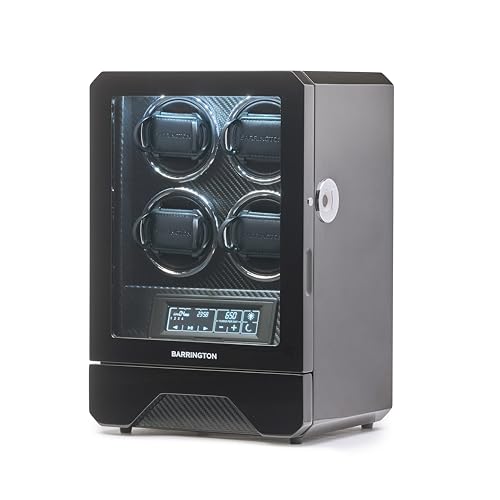
Table of Contents
- Models in this comparison
- Quick Verdict
- About Barrington Watch Winders
- About Boxy Watch Winders
- Precision Engineering and Movement Protection
- Design: Display vs. Enclosed Protection
- Capacity and Scalability for the Growing Collection
- Who Should Choose Barrington Watch Winders?
- Who Should Choose Boxy Watch Winders?
- Our Verdict
- Frequently Asked Questions
- Sources & References
Models in this comparison
Affiliate disclosure: if you buy through these links, we may earn a commission at no extra cost to you.

Quick Verdict
Choose Barrington Watch Winders if...
- You prioritize precision engineering with adjustable TPD (650 to 1,950 turns per day) and rotation directions to protect complex movements.
- You want a sophisticated display feature where the watch orients to the 12 o'clock position when stopped.
- You require specific cushion sizing (Omni or Micro) to ensure a perfect fit for various wrist sizes.
- You are looking for a premium, quiet Japanese motor and a 2-year international warranty.
Choose Boxy Watch Winders if...
- You are looking for budget-friendly, entry-level winding solutions for your automatic watches.
- Your primary need is basic rotation rather than highly granular, programmable TPD settings.
- You prefer a specific aesthetic or compact form factor offered by the Abest/Boxy product lines.
| Factor | Barrington Watch Winders | Boxy Watch Winders |
|---|---|---|
| Price Range (Per Unit) | Premium: $399 (Single) to $2,199 (6-Watch) | Varies by retailer/model |
| Primary Use Case | Serious collectors and high-end horology enthusiasts | Entry-level automatic watch maintenance |
| Technical Precision | Highly adjustable (650 to 1,950 TPD) with direction control | Standardized rotation settings |
| Design Philosophy | Display-focused: 12 o'clock upright orientation when stopped | Compact, enclosed-top storage focus |
| Key Advantage | Precision engineering with ultra-quiet Japanese motors | Accessible price point for basic winding needs |
| Main Drawback | Higher initial investment for premium builds | Less granular control for complex movements |
About Barrington Watch Winders
For the serious collector, Barrington Watch Winders represents a fusion of precision engineering and elegant display. The lineup is designed to scale with your collection, offering everything from the compact Oxford Single Watch Winder to larger multi-watch cabinets like the 4-watch ($1,499) and 6-watch ($2,199) models. These units are built to handle the specific needs of various movements, featuring independently programmable rotors that allow you to manage different TPD (Turns Per Day) requirements across a growing collection. This is particularly vital for complex calendar timepieces, where manual setting can be a tedious task or, in the case of perpetual calendars, a risk to the movement if handled incorrectly.
The Oxford Single Watch Winder serves as a standout entry point, utilizing an ultra-quiet Japanese motor and offering adjustable rotations ranging from 650 to 1,950 turns per day. It features a unique "Jump system" where, when the winding cycle stops, the winder orients the timepiece upright at the 12 o'clock position for a perfect display presentation. To ensure a proper fit for various wrist sizes, Barrington provides two cushion options: the 'Omni cushion' (16.5-22 cm) and the 'Micro cushion' (12.5-16.5 cm). With seven color options available and a 2-year international warranty, these winders are built to be both a functional tool and a centerpiece for your EDC and horological setup.
About Boxy Watch Winders
Boxy-style winders, such as those offered by Abest, typically cater to enthusiasts looking for a specific aesthetic and functional balance. These models often focus on a structured, box-like silhouette that provides a clear, enclosed display for your automatic watches. When comparing these to premium modular systems, the primary distinction lies in the design philosophy: while high-end collectors may prioritize independent programmable rotors for diverse movements, many "boxy" models focus on providing a streamlined, all-in-one housing for a few key timepieces.
In the context of a comparative analysis, it is important to note that the scope of these products often differs. While Barrington offers a wide range of capacity-based solutions—from single-watch units to large-scale cabinets—boxy-style winders are often specialized for smaller, more static setups. When choosing between them, the decision often comes down to whether you need the modular flexibility and precision-tuned TPD settings of a professional-grade winder or the compact, enclosed display of a specialized box-style unit.
Precision Engineering and Movement Protection
When comparing Barrington and Boxy, the primary distinction lies in the level of technical sophistication offered to the collector. Barrington winders, such as the Oxford series, are engineered with an ultra-quiet Japanese motor and feature highly adjustable settings. This allows owners to fine-tune the rotation direction—clockwise, counter-clockwise, or alternating—and adjust the turns per day (TPD) within a range of 650 to 1,950. This level of precision is critical for enthusiasts with complex calendar timepieces, where incorrect manual setting can lead to costly service bills. For these collectors, the ability to match the winder's output to the specific requirements of a calibre is a necessity rather than a luxury.
In contrast, the Boxy-style winders (such as those from Abest) typically focus on a more streamlined, plug-and-play user experience. While they serve the fundamental purpose of keeping an automatic movement running, they may not offer the same granular control over TPD or the specialized rotation directions found in the Barrington lineup. For a collector with a growing collection of diverse movements, the ability to provide independently programmable rotors—as seen in Barrington’s Double, Quad, and Six-watch models—provides a level of specialized care that standard closed-top winders often struggle to match.
Design: Display vs. Enclosed Protection
The aesthetic philosophy of these two options creates a clear divide between "display" and "storage." Barrington winders are designed as much for presentation as they are for winding. The Oxford Single Watch Winder, for instance, features a unique design where the watch orients to the 12 o'clock position when the motor stops, creating a professional showroom look. With seven color options ranging from classic black to vibrant orange, these units act as centerpiece decor for a desk or dresser. The availability of two cushion sizes—the 'Omni' for larger wrists and the 'Micro' for smaller diameters—ensures that the watch remains centered and secure, regardless of the timepiece's physical dimensions.
Boxy-style winders often lean toward a more traditional, enclosed aesthetic. These models frequently utilize a glass-top design that offers a clear view of the watch while keeping it shielded from dust and environmental factors. While this provides a sense of security and a "vault-like" feel, it lacks the dynamic presentation of the Barrington's upright orientation. For the collector who views their winder as a piece of furniture or a dedicated display stand, the Barrington's modular and color-rich approach offers more versatility than the more singular, static design of standard boxy winders.
Capacity and Scalability for the Growing Collection
A major factor in this comparison is how well the winder scales as a collection grows. Barrington provides a clear roadmap for the evolving enthusiast, offering everything from the single Oxford winder to high-capacity 4-watch and 6-watch units. The multi-watch models are designed with independently programmable rotors, meaning a collector can house a vintage piece requiring low TPD alongside a modern piece requiring higher rotations within the same unit. This modularity prevents the need to replace your entire setup every time you add a new timepiece to your rotation.
Boxy winders are often more limited in their capacity-to-feature ratio. While they are excellent for those with a single or dual-watch setup, they often lack the sophisticated internal partitioning required to manage a large, diverse collection safely. As a collection expands, the need for individual settings becomes paramount to prevent over-winding or under-winding specific movements. While Boxy models offer an affordable entry point for the casual user, Barrington’s tiered pricing—ranging from the $399 single winder to the $2,199 six-watch model—is built to accommodate the serious enthusiast's long-term investment.
Who Should Choose Barrington Watch Winders?
The Barrington collection is engineered for the collector who views their timepiece as a precision instrument requiring specific, technical care. If you own complex movements—particularly calendar or perpetual calendar timepieces—the ability to provide precise Turns Per Day (TPD) and specific rotation directions is critical. As noted by Time+Tide, manual setting for these complicated watches can be a tedious task, and incorrect settings can lead to expensive service bills; Barrington’s programmable rotors mitigate this risk by ensuring the watch is wound correctly accordings to its specific calibre.
The Barrington lineup is ideal for those with varying collection sizes and aesthetic preferences:
- The Single Watch Owner: The Oxford Single Watch Winder is a perfect choice for a daily driver or a single prized piece. With adjustable rotations ranging from 650 to 1,950 turns per day and an ultra-quiet Japanese motor, it offers professional-grade winding in a compact footprint. It also features two cushion sizes—the 'Omni cushion' (16.5-22 cm) and the 'Micro cushion' (12.5-16.5 cm)—to accommodate different wrist sizes.
- The Growing Collector: For those with multiple pieces, the 2-watch ($899), 4-watch ($1,499), and 6-watch ($2,199) models provide independently programmable rotors, allowing you to manage different movement requirements within a single unit.
- The Design Enthusiast: With seven color options (black, blue, white, green, orange, red, and yellow), Barrington caters to those who want their winder to complement their interior decor.
Who Should Choose Boxy Watch Winders?
The Boxy-style winders, such as those offered by Abest, generally target a different segment of the market. While Barrington focuses on precision-engineered, programmable-rotor systems designed for high-end horology, Boxy-style winders are often positioned as more budget-friendly, entry-level solutions for enthusiasts looking for basic functionality.
You might choose a Boxy-style winder if:
- You prioritize basic function over technical precision: If you own standard automatic movements that do not require highly specific TPD settings or complex rotation directions, a simpler winder may suffice.
- You are looking for an entry-level display: These models often focus on the visual aspect of a closed-top or glass-top display for a lower price point, serving as a functional piece of furniture for a growing collection.
- Budget is the primary driver: For collectors who want to keep their watches running without the investment required for premium, precision-engineered units like the Barrington Oxford series, these models offer a more accessible price-to-capacity ratio.
Ultimately, the choice depends on whether you view your winder as a technical tool to protect complex movements or a simple utility to keep basic automatics powered.
Our Verdict
When deciding between Barrington and Boxy, you aren't just choosing between two different designs; you are choosing between a precision-engineered horological instrument and a standard storage solution. Because these products serve different levels of collector needs, the "better" choice depends entirely on whether you prioritize technical accuracy or simple display.
The Case for Barrington: If you own high-end automatic timepieces—particularly those with complex calendars or perpetual movements—Barrington is the clear winner. The technical specifications, such as the ability to adjust rotations between 650 and 1,950 turns per day and the inclusion of an ultra-quiet Japanese motor, provide the level of control necessary to protect delicate movements. The ability to orient the watch to the 12 o'clock position when stopped makes it a superior display piece for a serious enthusiast. For those with growing collections, the modularity of the Double, Quad, and Six-watch winders—featuring independently programmable rotors—offers a scalable solution that a standard boxy winder cannot match.
The Case for Boxy: If your primary goal is a budget-friendly, aesthetic housing for a single everyday automatic, the Boxy-style winders serve as a functional entry point. They provide the basic rotation needed to keep a mainspring tensioned without the advanced TPD (Turns Per Day) customization found in the Barrington Oxford series.
Final Recommendation: For the serious collector, buy the Barrington. The investment in precision engineering, the 2-year international warranty, and the ability to match specific TPD requirements to your watch's calibre makes it a professional-grade tool rather than just a decorative box. If you are looking for a simple, low-stakes solution for a single watch, the Boxy options are sufficient, but they lack the technical depth required for a curated collection.
Frequently Asked Questions
What is the difference between the Omni and Micro cushions in the Barrington Oxford series?
The Oxford Single Watch Winder offers two cushion sizes to accommodate different wrist sizes and watch diameters. The 'Omni cushion' is designed for wrist sizes ranging from 16.5 to 22 cm, while the 'Micro cushion' is tailored for smaller wrist sizes between 12.5 and 16.5 cm.
How do I know the correct settings for my specific watch?
Choosing the right winder requires matching the device to your movement's specific needs. You should always check the required Turns Per Day (TPD) and rotation direction for your specific watch model or calibre. Barrington provides a Watch Winder Settings Database to help collectors find the correct parameters for their timepieces.
Why are adjustable TPD settings important for collectors?
Adjustable settings, such as the 650 to 1,950 turns per day available on the Oxford series, allow you to match the exact requirements of different movements. This is particularly critical for complex calendar timepieces to ensure they remain wound without over-winding or causing unnecessary wear to the mechanism.
Can I use these winders for a growing collection?
Yes. While single winders like the Oxford are excellent for everyday pieces, Barrington offers multi-watch winders including Double, Quad, and Six-watch models. These provide independently programmable rotors, allowing you to manage a growing collection with different movement requirements under one cohesive display.


